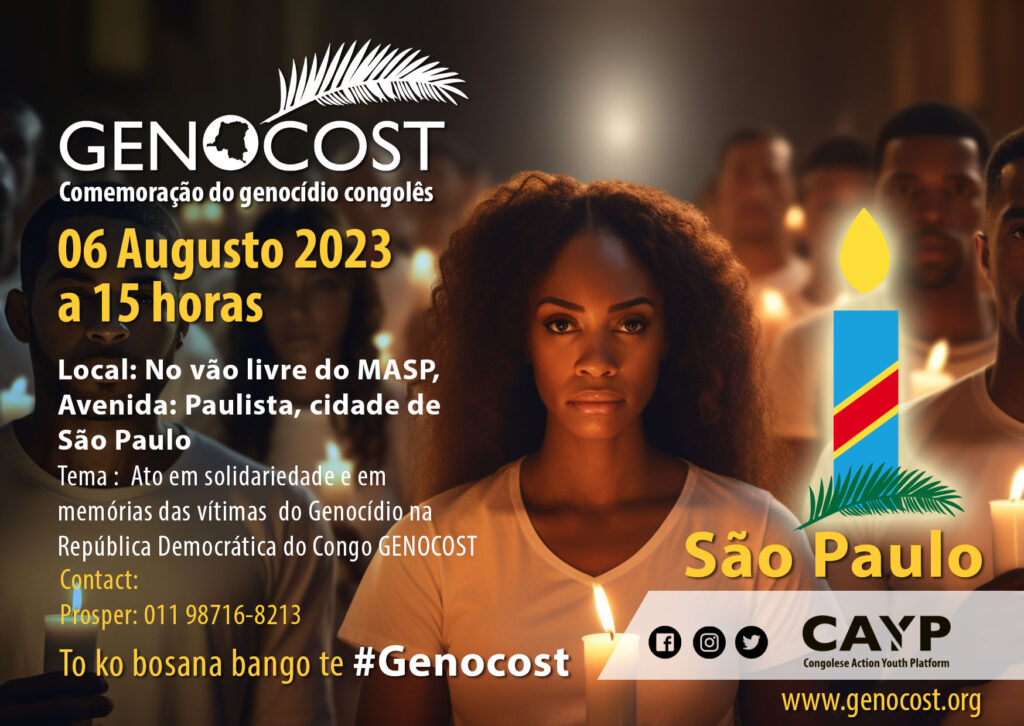
Supporting the Genocost campaign over the last decade has been one of the most rewarding projects of my career as both a designer and an event manager. The campaign seeks to raise awareness of the ongoing humanitarian tragedy in the Democratic Republic of the Congo and to honour the millions of lives lost.
Project Highlights
- Designed campaign artwork for 13 international commemorative events
- Created a unified visual identity across multiple countries and languages
- Produced flyers, social media graphics and press assets
- Workflow: Midjourney AI, Adobe Photoshop and Illustrator
- Delivered under a tight deadline while maintaining consistent branding
The 2023 campaign was, without doubt, one of the biggest creative challenges I have faced.
With only a limited amount of time, I was responsible for producing promotional material for 13 commemorative events across different cities, alongside social media graphics, press assets and other campaign materials. Each event required its own identity while remaining instantly recognisable as part of the wider Genocost campaign.
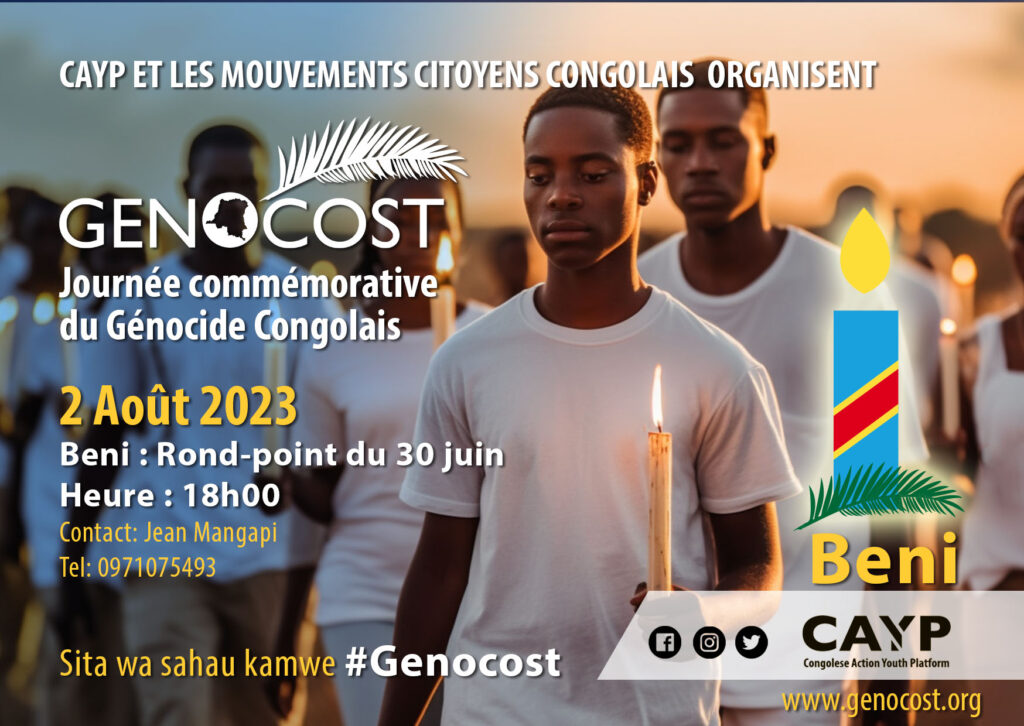
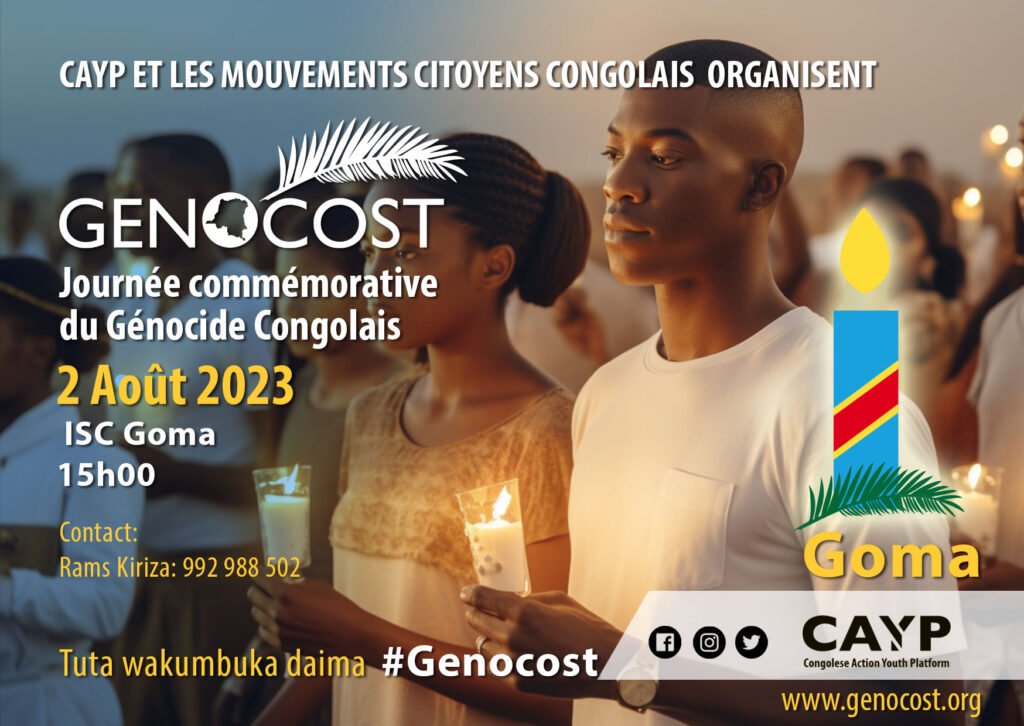
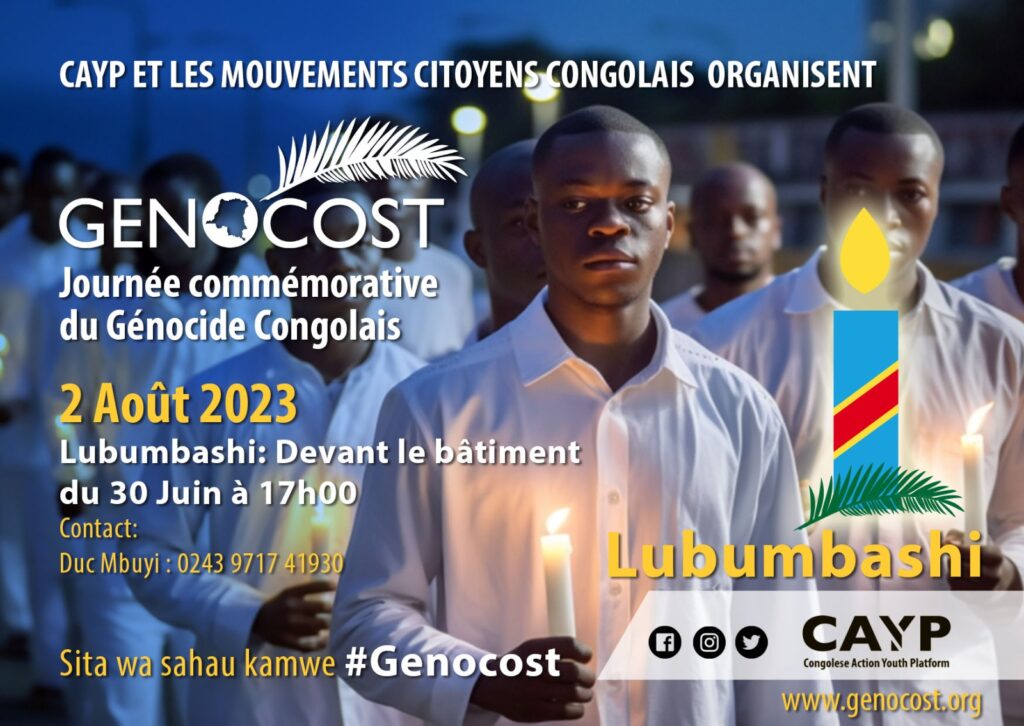
To achieve this, I combined Midjourney AI with Adobe Photoshop to create a series of visual concepts built around a consistent theme: remembrance, candlelight and hope. Once the artwork had been generated, I adapted each design to reflect the location of the individual event before using Photoshop to incorporate the event information, branding and campaign logos.
Full list of flyers on the Genocost website
The result was a coherent visual identity that could be efficiently adapted for every city while maintaining a strong emotional impact.
Using AI in this way was a genuine game changer. Instead of spending countless hours searching through stock photography libraries for images that only partially matched my vision, I was able to create bespoke backgrounds that reflected the atmosphere I wanted to communicate. This allowed me to spend more time refining the design and ensuring every flyer clearly communicated its message.
I had resisted using generative AI for a long time because of the ethical questions surrounding its development. Those concerns have not disappeared. However, I have come to accept that the technology is here to stay.
The Democratic Republic of the Congo has supplied the minerals that power much of today’s digital world, including the devices and data centres that make artificial intelligence possible. If these technologies exist in part because of Congolese resources, then I believe they can also be used to amplify Congolese voices.
For me, AI is no different from the internet, a camera or a mobile phone. It is another tool powered with minerals from the Congo. What matters is how it is used. In this case, it enabled me to help tell the story of people whose voices are too often ignored, and to support a campaign that continues to mean more to me than any other design project I have worked on.